Asia
I didn't plan Bali as a healing trip. I hate that word. It sounds like something you put on a vision board and then Instagram until it's hollow. But when I booked that flight I was running on empty. I had just left a job that had eaten me alive. And a relationship that had ended two years before was still sitting somewhere in my chest like a stone I hadn't quite put down yet. I needed to go somewhere that didn't know my name.
Bali didn't disappoint.
Ubud: The Soft Landing
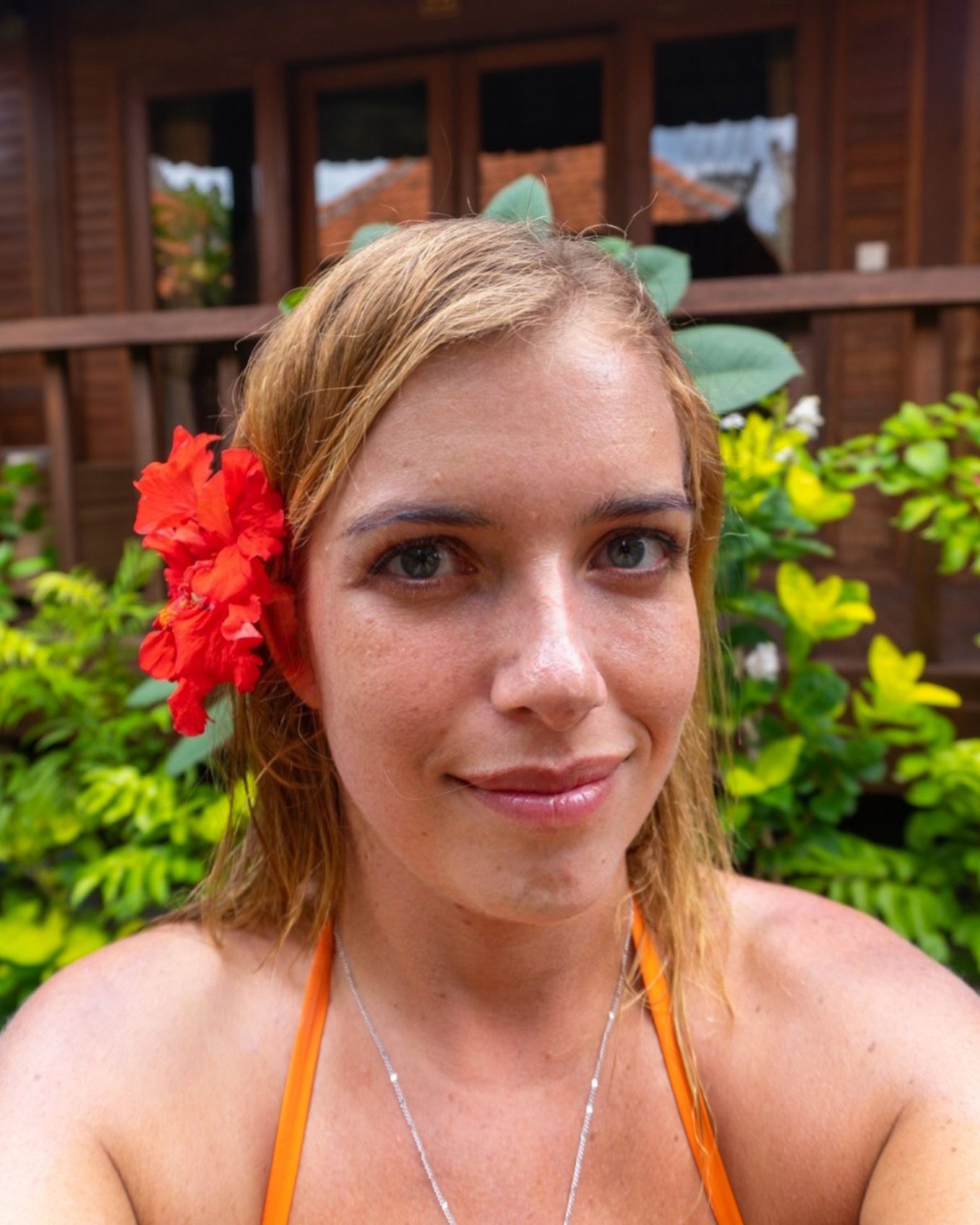
Tegallalang hit me first. Terraced rice fields falling into a valley in a shade of green that doesn't exist in Portugal, layer by layer, painted by hand. I met Inyoman there, a local who wandered over and called me his "Portugal friend" with such easy warmth that I had to laugh. At Tegallalang you can also do the Bali Swing: a wooden seat suspended over a jungle valley that sends you flying out over the canopy for about three seconds of pure terror and pure joy. Highly recommend.
That's Ubud in a sentence: strangers who feel like they already know you, jungle so thick it muffles the world, incense burning at every doorway, temples tucked into corners you weren't expecting.
Next was the Sacred Monkey Forest, where a macaque stole my friend's water bottle with the confidence of someone who owns the place. Immediately after, Bali Bohemia for lunch: a restaurant with the kind of worn-in charm that only exists in places that haven't tried to be anything. Great food, great people-watching, great light.
From Ubud I did several day trips. Tirta Empul, one of Bali's holiest water temples, where I stood in the purification pools while locals prayed around me, water pouring over my head in a ritual I didn't fully understand but felt something in anyway. Pura Ulun Danu Beratan, sitting at the edge of a crater lake so calm it looked like a painting. Tanah Lot at dusk, perched on its sea rock with waves crashing around it like it had always been exactly there. And Tirta Ganga in east Bali, a royal water palace of pools and fountains and intricate stone carvings: one of the most genuinely beautiful places I've ever stood in.
Then the waterfalls. Cepung first, a cathedral of a place where light filters through a narrow canyon onto a single drop of water, the kind of scene that looks fake until you're standing in it. Then Banyumala, a double waterfall tucked deep into the jungle that I loved immediately and completely. My friend did not make it to Banyumala. Bali belly had other plans for her that day.
Immediately before Taman Dedari: Cretya. Three-level infinity pools cascading down a hillside overlooking the Tegallalang rice terraces, every angle impossibly photogenic, the kind of pool club that makes you forget you are a person with responsibilities. I spent an unreasonable number of hours there.
And then there was Taman Dedari.
Nothing quite prepares you for it. A sprawling open-air complex of extraordinary stone sculptures, massive goddess figures rising out of lush greenery, coconut palms, flowers and water features, all of it impossibly beautiful and completely surreal. The restaurant inside, Aksata, sits among it all like someone suspended a dining room above Ubud's natural beauty and forgot to come back down. The food was good, the prices were laughably reasonable and my 1.2-million-view Reel was born there, which tells you everything about what that place looks like through a lens. Go for dinner. Go at golden hour if you can.
Canggu: Necessary Chaos
Canggu vibrates at a frequency that's hard to sustain for long but for a few days feels exactly right. Scooters everywhere, surfboards leaning against every café wall, menus in chalk, bare feet on every floor.
I started mornings at Copenhagen Bakery, which is exactly what it sounds like and also nothing like what you'd expect in the middle of Bali. Good enough to visit, not good enough to make me question the Portuguese pastelaria situation at home. I wandered through Love Anchor, an open-air bazaar that mixes vintage finds, local designers and street food in a way that makes you spend more than you planned without regretting it.
And then La Favela in Seminyak. It looks like what would happen if someone took a Brazilian favela, a Balinese jungle and a New York underground bar and threw them all into a blender: graffiti walls, artificial waterfalls, vintage antiques, hidden rooms, dim light and a giant Cristo Redentor presiding over the whole thing from inside. You walk in not entirely sure what you're looking at and walk out having loved it.
The beach clubs were their own chapter. La Brisa on Echo Beach is built from the reclaimed wood of 500 old fishermen's boats, bohemian and hand-decorated, the kind of place you drop your bags on a beanbag, order something cold and stay four hours longer than planned. La Plancha in Seminyak: rainbow umbrellas along the sand, coloured beanbags appearing at sunset like a ritual, the ocean doing its most dramatic work while you sit there with a drink and feel very pleased with your decisions. Finns Beach Club is the other end of the spectrum entirely: four pools, nine bars, five restaurants, the kind of place that carries you from afternoon into night without you quite noticing the transition.
Uluwatu: Where Everything Changed
I had surfed before. I grew up near the ocean in the Algarve, so the water was never foreign to me. But Uluwatu is different. The waves are long, serious and completely indifferent to your skill level.
Padang Padang sits on the Bukit Peninsula, halfway between Bingin and Suluban, and it is arguably the most famous stretch of water in Bali. The Rip Curl Cup runs here. The waves range from beginner-friendly rights to full overhead reef breaks that will very quickly inform you of your actual ability. I was somewhere between beginner and intermediate, which in Padang Padang means you're exactly humble enough to know you're going to get punished at some point.
I surfed the longest waves of my life there. Long, rolling walls of water that gave me more time than I was used to, more time to find my feet, to commit, to actually surf rather than just survive. There were sessions that felt like I had finally understood something I'd been studying for years without quite grasping.
And then there was the reef.
I fell wrong, came down heavy and the reef introduced itself to my backside in four long clean scratches. Tiger claw marks, basically. I hobbled out, assessed the damage, announced it to no one in particular and went back in. That's Padang Padang. It takes something from you and somehow you're fine with it.
Between sessions I found Driftr, a surf shop with a brunch setup I had no intention of leaving quickly. Good food, good coffee, the particular peace of sitting somewhere salt-crusted watching other people walk past with boards. For lunch, The Place With No Name: fantastic food that goes from burritos to fresh seafood, served with a glass straw and a heart-shaped coconut cutter that is either the cutest thing you've ever seen or the cutest thing you've ever seen. No in between. For dinner, Ours: city energy transplanted to the edge of Bali, the kind of restaurant that feels effortlessly cool without announcing it.
And yes, I watched the Kecak fire dance at the Uluwatu temple at sunset. A circle of men in black and white cloth, chanting in hypnotic unison, a flame at the centre, the Indian Ocean dropping off behind the clifftop stage. It didn't overwhelm me the way it does some people but I was glad I went. It's one of those things that lands differently depending on what you bring to it.
Practical note: Padang Padang is best during dry season (May to September) when easterly trade winds create clean offshore conditions. Beginners should stick to the rights; the main break is for experienced surfers.
The Temples: Bali's Other Rhythm
Between the surf sessions and the beach clubs there was a quieter thread running through the trip. Bali's temples aren't background scenery. They're in constant use, maintained by people who actually believe in what happens inside them. That's what you feel most: the living quality of it, the incense and the offerings and the ritual that continues whether tourists are watching or not. Standing in the purification pools at Tirta Empul, watching the light on the lake at Pura Ulun Danu Beratan, feeling the spray from the sea at Tanah Lot, standing in the water palace gardens at Tirta Ganga: each one left something different behind.
Nusa Ceningan and Nusa Lembongan: Two Islands, Two Entirely Different Moods
They're connected by a narrow yellow bridge you can cross on a scooter in about thirty seconds, but Nusa Ceningan and Nusa Lembongan could not be more different.
Ceningan is almost brutally beautiful. Blue Lagoon shimmered in a shade of turquoise I have no proper word for, the kind of colour that looks edited even when you're standing in front of it. The island is small, raw and largely unbothered by the desire to perform itself for anyone. That's rare.
Lembongan is where you go when you want to actually live a little. Still small, still relatively unhurried, but with the energy of a place that knows how to have a good time without taking itself too seriously. At Mahana Point, people were leaping off cliffs into the water below like it was nothing and surfers were shredding the break beneath them. I watched for a long time. Then I ended up at Mickey's Sports Bar, grabbed the mic and sang alongside the main singer in front of a room full of strangers. An absolute blast. The kind of night that costs almost nothing and gives you back something you didn't know you'd lost.
It was also in Lembongan that the friends I'd met back in Padang Padang continued the journey with me, and that made the island feel like something else entirely.
Between the two islands you get the full picture: wild natural beauty on one side of a bridge and the easy warmth of people on the other.
Nusa Penida: Elemental
I stayed overnight on Nusa Penida, which is the right call. The day-trippers see the highlights but staying means you see it before and after they arrive, and those hours are completely different.
Kelingking Beach from the air is the kind of view that makes you understand why people become travel creators. Those knife-edged cliffs dropping straight into the Indian Ocean look like they were drawn by someone who didn't believe in moderation. Diamond Beach had a rawness to it that felt genuinely untouched. I climbed to the treehouse and felt briefly unhinged from ordinary life in the best possible way. And Angel's Billabong: a natural infinity pool carved into the coastal rock by centuries of ocean, the water shifting between jade and turquoise depending on the light, waves crashing just beyond the edge. The kind of place that makes you sit down and just stare for a while.
Gili T: Five Nights, One Fever, Zero Regrets
I planned five nights on Gili T. Then my friends and I got sick for a day or two and suddenly five nights felt like exactly the right call. That's the thing about Gili T: it's precisely the right place to do nothing when doing nothing is what you need.
No cars, no motorbikes, just bicycles and horse-drawn carts and the particular quiet of an island that has decided not to rush. I snorkelled past underwater statues, watched turtles move through the blue with an ease that makes you feel briefly ashamed of how hard you make everything. I rode along the beach on horseback as the light dropped. I ate at a table in the sand. I slept without an alarm.
The friends I'd met in Padang Padang had been with me since, and there's something about being ill together on a small island that fast-tracks a friendship in ways that normal circumstances never could.
Lombok and Selong Belanak: The Recalibration
Lombok moves at its own rhythm, slower and less performed than Bali. Selong Belanak is one of the most beautiful bays I've ever seen: a wide crescent of white sand, water buffaloes wandering along the shore, waves that are gentler and more forgiving than Padang Padang, a good place to consolidate everything Uluwatu had taught me through its various methods including the reef incident. I surfed again under a sky doing something genuinely ridiculous with light.
Then Tanjung Aan, just down the coast: a vast horseshoe bay with sand so fine and white it almost doesn't look real. The water was dark and wild, more Atlantic than tropical, which made the whole thing feel strangely familiar and completely unexpected at the same time. I swam and watched boats ferrying surfers out to waves so far back they were barely visible from shore.
What Bali Actually Did
I didn't find myself. I find that phrase just as hollow as healing. But something loosened. The job stress, the old grief, the general weight of being someone trying too hard to figure out the next thing: some of it dissolved in saltwater and rice terraces and long evenings on clifftops watching the light go gold.
Bali is crowded in the places that have been discovered and wild in the places that haven't. It's spiritual without being performative about it, at least if you're paying attention. It's the kind of place that asks you to slow down and then, when you do, shows you what you've been missing.
I left with scratches on my backside, footage I'm still editing and something I can only describe as a recalibrated sense of what matters.
If it cracked something open in you too, tell me in the comments. And if you haven't gone yet: this is your sign.